In the high-stakes arena of global agricultural procurement, your supply chain is only as robust as your most vulnerable vendor. For international purchasing managers, wholesale distributors, and institutional buyers, sourcing bulk agriculture imports represents a massive financial and strategic commitment. A single misstep in vendor selection can lead to rejected customs shipments, compromised brand reputation, and devastating revenue losses that take years to recover from.
When looking to source premium long-grain and parboiled varieties, Pakistan naturally emerges as a premier global destination. The country is celebrated worldwide for its highly fertile lands, centuries-old farming heritage, and rapidly advancing agricultural processing technology. However, knowing where to buy is merely the first step. The true challenge for international buyers lies in knowing exactly who to buy from.
Navigating the complex landscape of the top rice exporters in Pakistan requires rigorous due diligence, technical industry knowledge, and a clear set of strict vetting criteria. This comprehensive guide will walk you through exactly how to evaluate, select, and partner with a reliable wholesale rice supplier that perfectly aligns with your specific B2B volume requirements, strict quality thresholds, and global logistical needs.
Understanding the Competitive Landscape: The Top Rice Exporters in Pakistan
Before diving into the operational vetting process, it is essential to understand the playing field of the global rice trade originating from South Asia. The Pakistani export sector is robust and highly competitive, featuring a diverse mix of massive conglomerates, legacy mills, and agile, quality-focused processors.
As a global buyer researching the market, you will likely encounter several legacy names and large-scale entities in the industry. Competitors such as Garibsons (Pvt) Ltd, Waqar Rice Mills, and Amir Rice Mills (Pvt) Ltd have long established their physical presence in the bulk export market. Similarly, massive publicly listed or large-scale conglomerates like Matco Foods Limited, Guard Rice Mills, Galaxy Rice Mills, and Meskay & Femtee manage incredible volumes of global agricultural trade.
Read more about the history and evolution of rice milling in Pakistan
While these companies represent the sheer scale of Pakistan’s export capabilities, sheer size does not always equate to the best B2B partnership for every international buyer. Giant conglomerates can sometimes suffer from rigid corporate bureaucracies. This can make them surprisingly slow or inflexible when accommodating customized private labeling requests, bespoke packaging solutions, or highly specific moisture and grain-length tolerances required by niche high-end markets.
For many international wholesalers and regional distributors, the strategic “sweet spot” lies in partnering with dedicated, highly specialized millers—like IT Foods. These agile processors combine massive daily processing capacities with the personalized, highly responsive customer service necessary to build long-term, mutually beneficial B2B partnerships.
The 5 Essential Pillars for Vetting Wholesale Rice Suppliers
Choosing a supplier should never be based on FOB (Free On Board) or CIF (Cost, Insurance, and Freight) pricing alone. The absolute cheapest price per metric ton often masks hidden costs in the form of high broken grain percentages, inconsistent color sorting, or poor logistical execution. Here is the ultimate 5-point checklist for choosing a reliable, long-term export partner.
1. Technological Superiority in Milling and Sorting
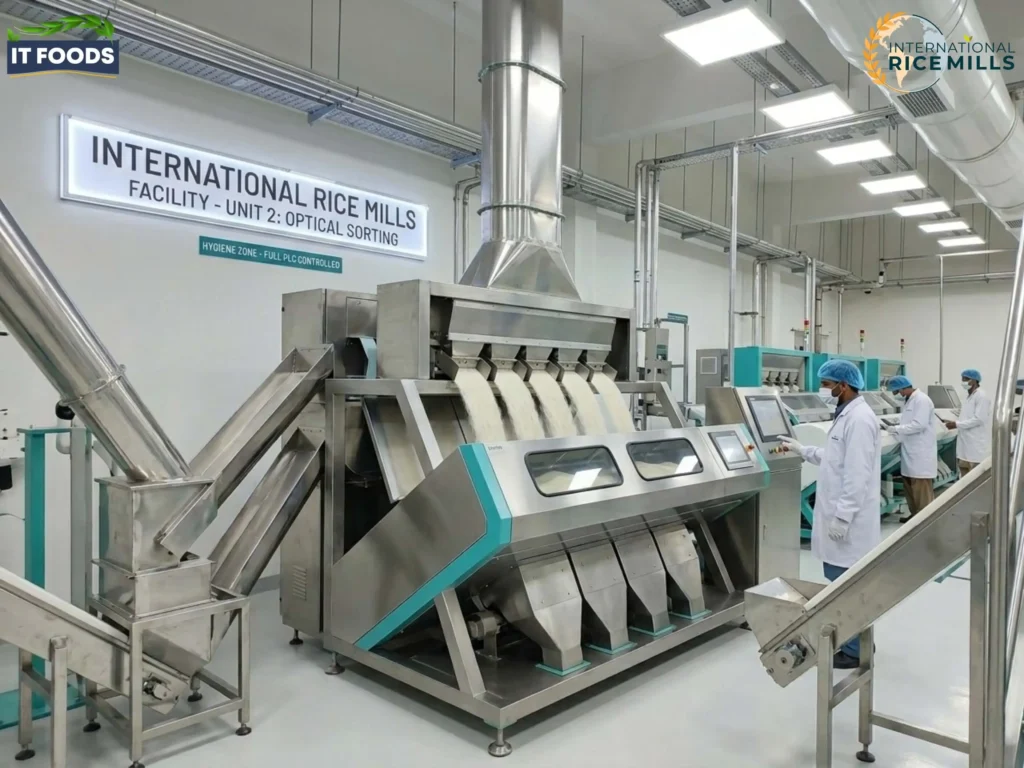
In today’s market, you are not just buying rice; you are buying the advanced technology used to process it. Traditional, outdated milling methods simply cannot meet modern international food safety standards. When auditing a potential partner, inquire deeply about their facility’s physical infrastructure.
Do they use modern optical color-sorting machines? Are their parboiling units automated to ensure consistent gelatinization of the grain? A reliable supplier must be able to guarantee optimal moisture content—typically strictly capped at 12% to 12.5% maximum—and limit broken grains to under 1% for premium export varieties. For instance, top-tier facilities like the International Rice Mills operated by IT Foods expand over massive areas and possess the advanced mechanical capacity to produce and process up to 100 metric tons per day. This scale ensures they can handle your bulk orders without ever breaking a sweat or sacrificing quality.
2. Uncompromising Certifications and Global Compliance
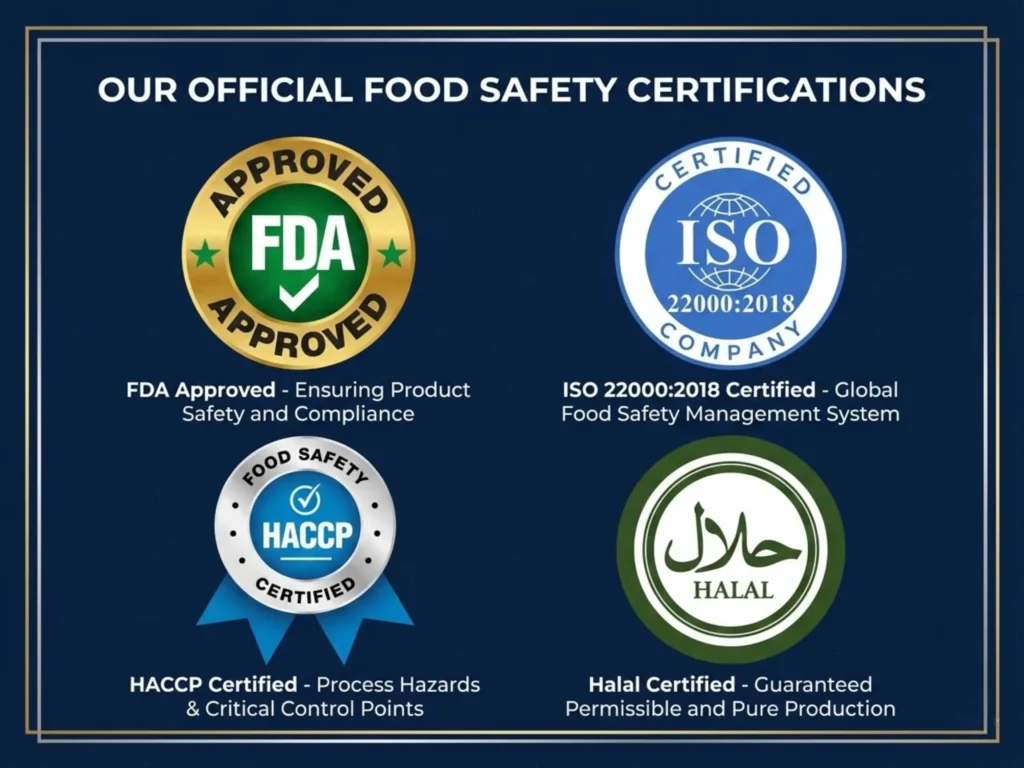
In global B2B trade, trust must be independently verified by third-party authorities. Your wholesale supplier must hold internationally recognized certifications to ensure smooth, delay-free customs clearance in highly regulated regions like the USA, the UK, the UAE, and the broader European Union.
Never accept mere verbal assurances of hygiene or quality. Demand to see valid, up-to-date documentation. A world-class exporter will proudly and transparently display credentials such as FDA approval, HACCP (Hazard Analysis Critical Control Point) certification for rigorous food safety, ISO 22000:2018 for comprehensive food safety management systems, and official Halal certification—which is absolutely critical for accessing Middle Eastern markets. These certifications act as a non-negotiable insurance policy for your supply chain.
Verify the latest global ISO 22000 food safety standards and compliance requirements here
3. A Deep, Premium Product Portfolio
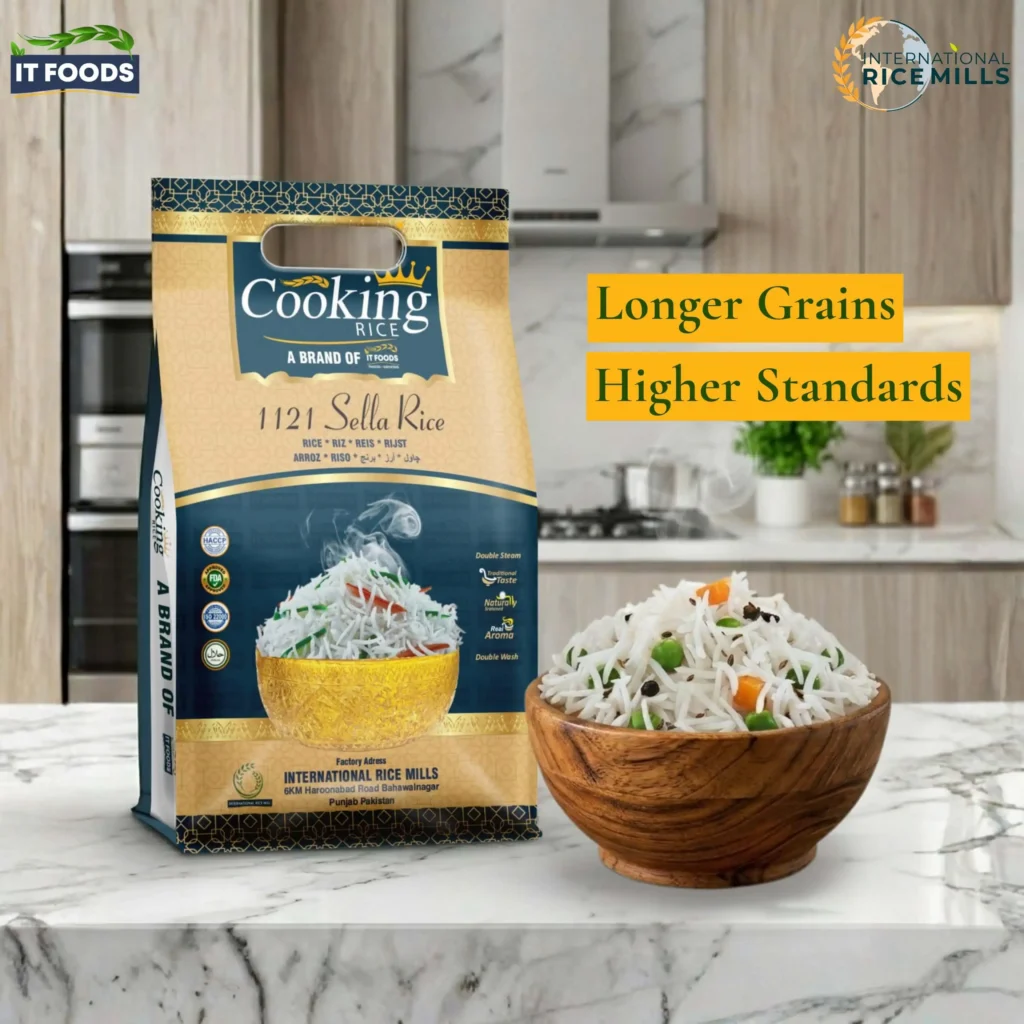
Global consumer demands are constantly shifting, and your supplier must possess the agricultural versatility to pivot with you. Partnering with a miller that only processes one or two types of grain severely limits your business growth. Look for suppliers that specialize in a wide, stable array of premium and bulk commercial varieties.
A robust B2B portfolio should prominently feature high-end aromatic varieties like 1121 Creamy Sella, 1121 Golden Sella, and 1509 Sella. It must also include high-volume, highly competitive commercial options such as IR64 Sella, Super Fine Sella, and Irri-9-C9 Sella. Furthermore, as global health and wellness trends evolve, leading exporters are adapting by offering specialized premium products, such as Pesticide-Free Kainat 1121 and Pesticide-Free 1509 Sella rice.
Browse our complete technical catalog of export-grade rice varieties and specifications
4. Farm-to-Port Traceability and Supply Chain Integrity
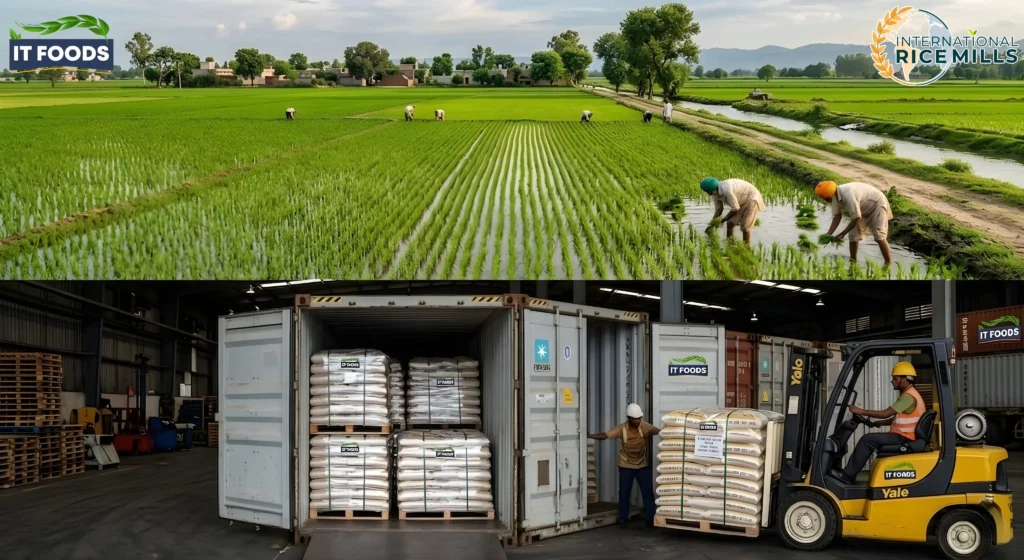
The most successful exporters have deep-rooted, multi-generational relationships with local farmers. They do not just buy randomly from secondary wholesale markets; they oversee the direct procurement of raw paddy directly from the fertile, mineral-rich fields of the Punjab and Sindh provinces.
This farm-level traceability ensures that natural admixture is tightly controlled (kept under 5%) and physical parameters are met. For example, ensuring an impressive average grain length of 8.35 MM+ for 1121 varieties, or maintaining a whiteness score of 38+ Kett for Super Fine variants.
5. Proven Logistics and Global Export Reach
Producing exceptional rice is only half of the export battle. Your chosen supplier must be an absolute expert in global freight logistics, hygienic container loading, and complex customs documentation. A reliable exporter will boast a proven track record of consistently supplying major international markets without delays.
Look for partners who actively and currently export to highly competitive regions like the UAE, UK, USA, Saudi Arabia, Qatar, Kuwait, Oman, Bahrain, Yemen, Iraq, Jordan, Egypt, and Sri Lanka. Their deep familiarity with the specific phytosanitary requirements, labeling laws, and import taxes of these diverse nations will save your business from costly port delays and demographic hurdles.
Evaluating the Cost of Poor B2B Agricultural Procurement
To truly understand the value of a premium partner, one must look at the reality of partnering with a subpar vendor. Imagine securing a lucrative, multi-year contract to supply a major Middle Eastern supermarket chain with premium Basmati. To pad your profit margins, you opt for a cheaper, unverified trading desk over a certified miller.
When the containers arrive at your destination port, rigorous customs inspections reveal a moisture content of 14.5%, leading to rapid fungal growth and pest infestation during the sea transit. The entire multi-container shipment is rejected by authorities. Not only do you lose your massive initial capital investment, but you entirely fail to deliver to your retail client, irreparably damaging a brand reputation that took you decades to build. This exact scenario is why seasoned importers prioritize trust, technological infrastructure, and long-term partnerships over the absolute lowest price per metric ton.
Why B2B Buyers Trust IT Foods as Their Elite Export Partner
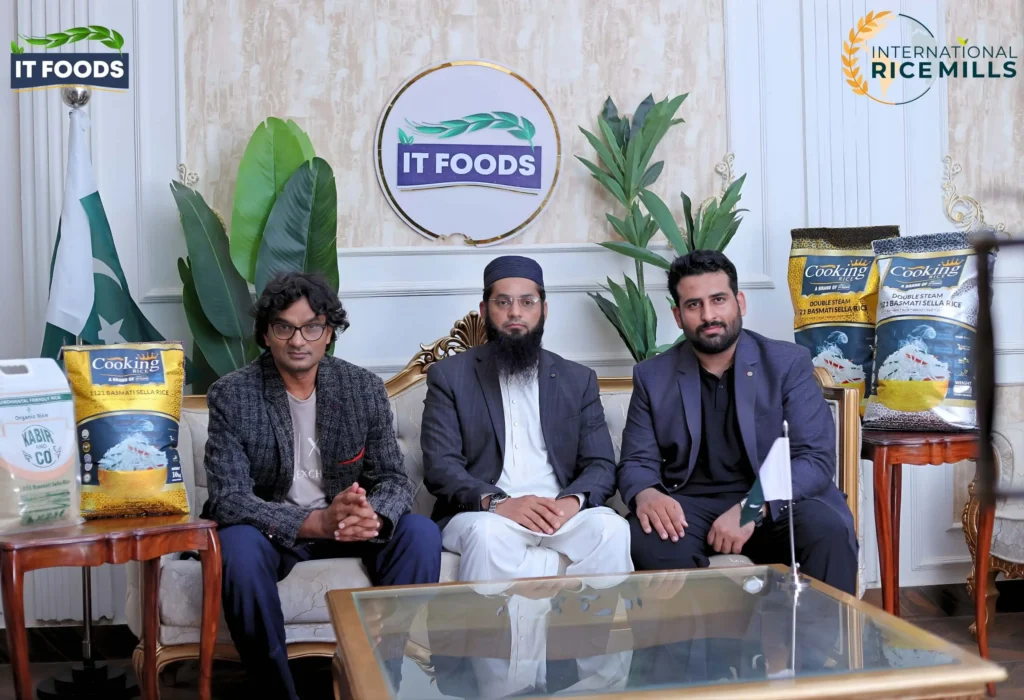
While navigating the landscape of mega-competitors like Matco, Garibsons, and Guard Rice Mills provides a baseline understanding of the industry, discerning international buyers require a partner that flawlessly blends massive production capacity with meticulous, personalized quality control. This is exactly where IT Foods—operating through our advanced International Rice Mills facility—redefines the B2B standard.
Learn more about the history, executive team, and global vision of IT Foods
With over two decades of dedicated, hands-on experience, IT Foods has firmly established itself as a leading miller and exporter of premium parboiled rice. Located strategically on the 6KM Haroonabad Road in Bahawalnagar, Punjab, our factory sits in the absolute heart of Pakistan’s prime agricultural region. Under the expert leadership of Chief Executive Muhammed Umar Farooq, Managing Partner Usman Farooq, and Managing Director Saghir Tabbsum, we have built a culture that refuses to compromise on quality or health.
Here is why international purchasing managers consistently choose IT Foods as their primary supply chain partner:
- Unrivaled Processing Capacity: Our International Rice Mills facility expands over a massive geographic footprint and is equipped with cutting-edge technology, giving us the verified capacity to produce an astounding 100 metric tons of pure quality Pakistani rice every single day.
- Flawless Quality Metrics: We guarantee exceptional grain integrity. For our premium flagship 1121 Creamy Sella, we guarantee 95.00% purity, a strict maximum of 1% broken grains, zero foreign matter, and an impressive average grain length of 8.35 MM. Our rigorous process ensures 100% Sortex cleaned perfection across our renowned “Cooking Rice” brand line.
- Global Market Readiness: We export happiness in the form of rice. We proudly hold every major international certification required for frictionless global trade, including FDA Approval, ISO 22000:2018, HACCP, and official Halal certification.
Whether you require bulk shipments of cost-effective IR64 Sella or carefully packaged, private-label containers of our Pesticide-Free Kainat 1121 Sella, our dedicated customer service and expert export team ensures smooth, timely delivery, making IT Foods a trusted, elite name across continents.
Frequently Asked Questions (FAQs) by International Buyers
To further assist your global procurement strategy, here are detailed answers to the most common questions we receive regarding bulk agriculture imports and the Pakistani export market.
What makes the top rice exporters in Pakistan different from suppliers in other Asian countries?
Pakistan’s unique geographical advantage—specifically the mineral-rich soil and distinct climatic fluctuations of the Punjab region—allows for the cultivation of incredibly long, highly aromatic grains like the 1121 Sella. Combined with heavy investments in modern milling technology, Pakistani exporters offer a superior balance of premium quality, unmatched grain elongation, and highly competitive pricing compared to global alternatives.
How do wholesale rice suppliers guarantee grain length and absolute purity?
Leading suppliers like IT Foods utilize highly advanced optical Sortex machines on their production lines. This automated technology scans every individual grain at high speeds, automatically rejecting discolored, broken, or undersized grains using targeted bursts of air. This guarantees that strict parameters—like an 8.35 MM average grain length and 95%+ purity—are consistently met in every single bag.
Why is precise moisture content so critical in the global rice trade?
For international ocean freight, moisture content is quite literally a matter of shipment survival. If rice is packed with a moisture level above 13%, the extreme temperature fluctuations inside a steel shipping container during transit can cause condensation. This leads to mold, severe spoilage, and pest infestations. Reliable exporters strictly dry and mill their rice to maintain a safe, maximum moisture level of 12% to 12.5%.
Can IT Foods handle custom packaging and private labeling for bulk agriculture imports?
Absolutely. We deeply understand that many of our B2B clients operate their own established retail or wholesale brands in their home countries. Our flexible supply chain and advanced packaging infrastructure allow us to easily accommodate custom private labeling requests, ensuring your brand name is backed by our world-class, export-grade quality.
What is the exact difference between 1121 Creamy Sella and 1121 Golden Sella?
Both are premium, extra-long grain parboiled varieties highly favored by the global hospitality industry. However, 1121 Golden Sella undergoes a slightly different, extended parboiling process that leaves the grain with a distinct, appealing golden hue. This process hardens the grain further, making it exceptionally resistant to overcooking. Creamy Sella retains a lighter, whiter appearance (measured at a strict 38 Kett Min whiteness) while offering the exact same impressive elongation and non-sticky cooking properties.
What questions should I ask a rice exporter before my first order?
Ask for current FDA, HACCP, ISO 22000 and Halal certificates in the company name, ask for a sample and a lab report for the exact grade, ask for a live video call from the mill, and ask for a written proforma invoice with supply, delivery in 10 to 15 days, and the full document list. A genuine exporter will answer each question clearly, with documents to back it up.
How can I check a supplier’s export history before I pay?
Ask which countries the supplier exports to and how long they have exported to each one. IT Foods exports to more than 20 countries, including the UK, UAE, Saudi Arabia and the USA, with more than 20 years of experience. Check the company website and product pages, ask for the full document list, and confirm supply of 500 to 1000 tons per week with delivery in 10 to 15 days. Clear, specific answers with documents to back them up are a good sign.
Questions to Ask a Rice Supplier Before You Order
Before you place a first order, ask your supplier the questions below and write down the answers. A good supplier will answer each one clearly, with documents to back it up. A supplier who avoids a question, or whose answers change, is giving you a reason to slow down. Use these questions on every first order, and keep the answers with your order file.
Ask about certifications and compliance
Ask which certifications the mill holds, and ask to see them. IT Foods holds FDA, HACCP, ISO 22000 and Halal certifications, and is a TDAP registered exporter. Check that the name on each certificate matches the company you are paying, that the dates are current, and that the scope covers rice milling and export. If a certificate is expired, or in a different company name, ask why before you go further.
Ask about the mill, samples and lab reports
Ask where the rice is milled, and ask for a live video call from the mill if you cannot visit. Ask for a sample of the exact variety and grade you want to buy, and cook it in the way your customers cook it. Then ask for a lab report for the same lot, showing moisture, purity and broken grain levels, and compare the report with the sample. Keep the sample and the report together, so you can compare them with the shipment when it arrives.
Ask about supply, delivery and payment
Ask how much the mill can supply each week, how long delivery takes, and what happens if a shipment is delayed. IT Foods can supply 500 to 1000 tons per week, with delivery in 10 to 15 days, from its Bahawalnagar mill. Ask for a written proforma invoice that lists the variety, grade, quantity, packing, price, delivery time and documents, and confirm that payment goes to a company bank account in the same company name. For the full checks behind each question, read our guides on how to verify a rice exporter in Pakistan before you pay and our rice export documents checklist.
| What to check | What a good answer looks like | Red flag |
|---|---|---|
| Certifications | Current FDA, HACCP, ISO 22000 and Halal certificates in the company name | Expired certificates, or certificates in a different name |
| Mill visit | A visit, or a live video call from the mill showing your rice and packing | Photos only, or a refusal to show the mill live |
| Sample and lab report | A sample of the exact grade, with a matching lab report | No sample, or a report that does not match the sample |
| Supply and delivery | Clear weekly supply, and delivery in 10 to 15 days, in writing | Vague supply, or a delivery time that keeps changing |
| Payment terms | Written proforma invoice, payment to a company bank account | Full advance payment to a personal account |
| Documents | Full document list before payment, checked on arrival | Missing or wrong documents at the port |
What Certifications Mean in Plain Words
Certifications are useful only if you know what each one checks. Use this short guide when you read a supplier certificate, and ask for the certificate itself, not just a logo on a website.
- FDA: the exporter is registered with the United States Food and Drug Administration, so its rice can be offered for sale in the United States market.
- HACCP: the mill follows a written food safety plan that finds likely hazards and controls them at set points in production.
- ISO 22000: the company runs a food safety management system that covers its processes from receiving paddy to dispatch.
- Halal: the rice and the way it is handled meet Halal requirements, which matters for buyers serving Muslim consumers.
- TDAP: the exporter is registered with the Trade Development Authority of Pakistan, the government body for exporters.
The 2026 Guide also named REAP and BCCI in its standards list. Ask what membership or registration a supplier holds there, and check the document rather than taking a logo at face value.
Seven Reasons Buyers Choose IT Foods, in Short
The seven reasons below sum up the companion guide, in short form.
- Location: rice is sourced from Punjab and Sindh, including Bahawalnagar, where the soil and climate suit long grain rice.
- Milling capacity: a high capacity, fully equipped mill processes large orders without long delays.
- Parboiling skill: premium Sella rice is parboiled so the grains stay separate, elongate on cooking and keep a firm texture.
- Range: Basmati, Sella, IRRI and other varieties are available for retail, restaurant and bulk buyers, in the pack sizes they need.
- Risk control: farm to port traceability and quality checks at each stage reduce the chance of a bad shipment.
- Certification: FDA, HACCP, ISO 22000 and Halal certification back the quality claims, with documents a buyer can check.
- Logistics: established export and shipping links move orders to the buyer port, with FOB and CIF terms available.
How to Judge an Exporter, and What Happens After You Order
From the 2026 Guide, two short checklists are worth keeping.
A short checklist before you choose
- Export volume and experience
- Quality certifications
- Processing facility standards
- International market presence
- Client testimonials and references
The export process in four steps
- Step 1: Quality testing
- Step 2: Processing and packaging
- Step 3: Documentation and logistics
- Step 4: Shipment tracking
That is the order in the 2026 Guide. If a supplier cannot explain which step your order is at, treat that as a warning sign.
Secure Your Global Supply Chain with IT Foods Today
Choosing the right wholesale partner is unequivocally the single most important strategic decision you will make for your agricultural import business. Do not leave your supply chain, your margins, and your reputation to chance by partnering with unverified trading desks or overly rigid, slow-moving conglomerates. You need a dedicated, globally certified miller who views your commercial success as an extension of their own.
At IT Foods, excellence in quality is our ultimate aim. We invite you to experience the profound difference that over twenty years of industry expertise, cutting-edge milling technology, and an unwavering commitment to B2B customer satisfaction can make for your enterprise.
Contact the IT Foods Export Team directly to request an updated FOB/CIF quote and product catalog
Reach out to our executive team today at +92 300 7033 554 or visit us online at www.itfoods.com.pk and www.internationalricemills.com. Let IT Foods provide you with the pure quality Pakistani rice that will elevate your brand, satisfy your consumers, and permanently secure your global market share.
We are certified premium-quality rice exporter from Pakistan.